House of European History
The House of European History is a museum and cultural program dedicated to exploring the complex history of Europe from a transnational perspective. Rather than focusing on a single country or narrative, it examines shared experiences, contrasting viewpoints, and interconnected developments across the continent. Through a chronological and thematic approach, the museum addresses major historical processes such as revolutions, wars, totalitarian regimes, integration, and the evolution of democratic values. The program combines original historical objects, archival materials, multimedia installations, and personal testimonies to create an immersive learning experience. Visitors are encouraged to reflect critically on how Europe’s past has shaped contemporary society and how collective memory influences present-day political and cultural debates. The House of European History promotes dialogue, inclusivity, and historical awareness, making it a key platform for education, research, and intercultural exchange.
Why the House of European History is Co-Organising and Hosting the Conference
As a museum dedicated to exploring Europe’s shared and diverse pasts, the HEH provides a unique, transnational learning environment.
At the heart of the HEH’s mission is the encouragement of critical reflection and open inquiry. Through its educational programmes, the museum invites learners to explore complex social developments, such as European integration, colonialism, and contemporary forms of racism and discrimination, with curiosity and empathy. Our learning policy is rooted in multiperspectivity, encouraging visitors to discover both common ground and differing historical memories across Europe.
The conference will take place during the museum’s upcoming temporary exhibition, which focuses on colonialism and its legacy, decolonisation and anti-racism. This setting offers an ideal framework for deepening understanding of systemic racism, colonial histories, and their ongoing legacies.
The museum will also highlight HistoriCall!, the digital learning toolbox for teachers and students across Europe. The module aimed at secondary school students will be launched for the conference and will empower learners to critically engage with racism and colonialism and foster agency in resisting injustice.
In co-hosting this conference, the HEH reaffirms its commitment to supporting educators and cultural professionals who are shaping the next generation of engaged, thoughtful, and resilient European citizens.
Guided tour of the permanent exhibition
This tour highlights the museum's permanent exhibition and explore significant European phenomena that have shaped the continent, offering unique perspectives on its history.
As the guide takes you through the main exhibition, you’ll notice that we don’t tell the story of each European nation individually. Instead, we explore how history has shaped a collective European memory and continues to influence our lives today and in the future.
The guided tour covers the main events and phenomena that have united and divided Europeans over time. By interpreting history from a collective European perspective, the tour connects and compares shared experiences and their diverse interpretations. As in our own lives, some things we want to remember, while others we prefer to forget. The same event can be interpreted from different perspectives, adding richness to our understanding of history.
Time: Sunday, April 26 10:30 – 12:00
Capacity: 35 participants
Postcolonial Visit
In addition to the Postcolonial Visit to the House of European History, participants will also have the opportunity to join a tour organised by the Collectif “Mémoire Coloniale et Lutte contre les Discriminations”. Together, these two activities offer a broader reflection on Europe’s colonial past and its ongoing impact on contemporary societies.
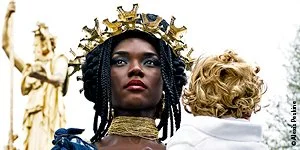
Postcolonial Visit
The 90-minute guided tour at the House of European History provides an overview of the exhibition Postcolonial Visit for adult visitors. The visit focuses on the historical links between colonialism and racism, examining how European colonial expansion shaped political, economic, and social structures that continue to organise power, wealth, and inequality today. Through a selection of artworks and historical objects, participants are invited to reflect on how colonial ideologies were constructed, how they were embedded in institutions and systems, and how their legacies persist in contemporary Europe and beyond. The tour encourages critical engagement with Europe’s shared history and its global consequences.
Further information about the museum and its programmes is available here.
Time: Tuesday, April 28 16:00 – 17:30
Capacity: 60 participants
Address
Rue Belliard 135, 1040 Bruxelles, Belgium
Do you want to see the venues?